Smart Ways to Reuse Leftover Coffee Grounds for Cleaner, Fresher Spaces
Leftover coffee grounds are a common Kitchen byproduct that can do more than head to the compost — they make effective, low-cost scrubs and deodorizers around the home. Because grounds are gritty and pigmented, they can be helpful on tough grime but also risk staining fabric or porous stone and can clog drains if used carelessly, so a little caution is needed.
In this piece you’ll learn simple, safe ways to prepare and use spent grounds for scrubbing sinks and cookware, neutralizing odors in bins and refrigerators, and freshening closets and shoes — plus practical precautions for storage, disposal, and which surfaces to avoid.
Key Points
- Dampen coffee grounds before scrubbing to lift grease effectively but avoid porous or delicate surfaces to prevent scratching or staining.
- Use dried grounds in breathable containers to absorb odors in refrigerators and closets while replacing regularly to prevent mold.
- Never dispose of wet grounds down drains; compost or trash dry grounds to protect plumbing and enrich soil safely.
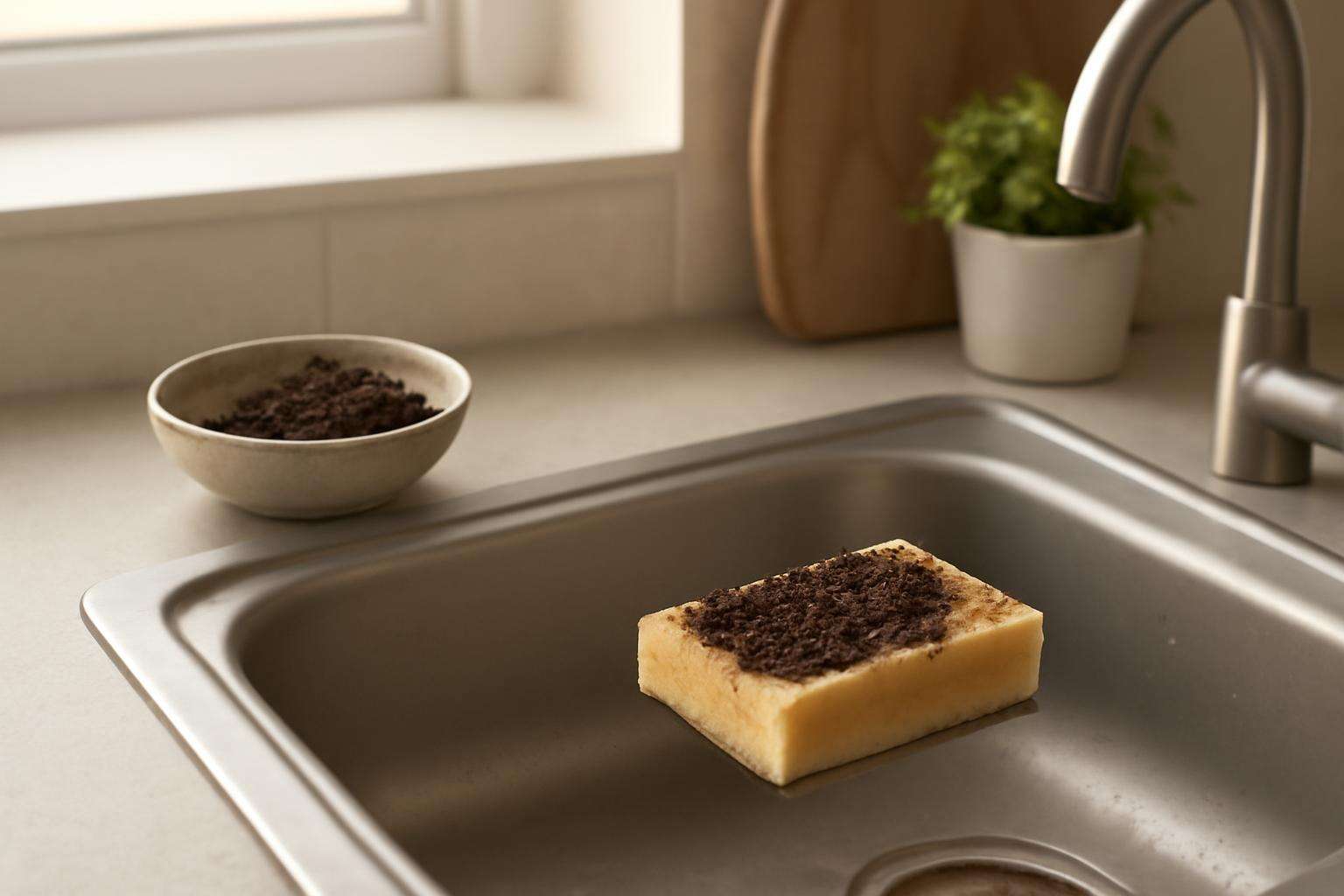
Scrub sinks, pots and pans with a gentle abrasive
Dampen the spent grounds slightly, sprinkle them on greasy areas, then scrub with a soft cloth or nonabrasive sponge and rinse thoroughly because the gritty texture lifts stuck-on food and the grounds help absorb oils.
Avoid using grounds on porous stone, polished marble, nonstick coatings, or delicate fabrics and test on an inconspicuous spot first because the particles can scratch or stain; don’t let grounds sit and dry on surfaces.
Neutralize odors in bins and the fridge
Place dried grounds in a shallow dish or breathable pouch and tuck it into the fridge or under the sink to absorb and mask odors, since coffee grounds naturally bind odor-causing molecules.
Replace or refresh the grounds weekly and keep them dry to prevent mold growth, and never put loose wet grounds directly on fridge shelves or open food where they could transfer flavor or moisture.
Freshen shoes, closets and small spaces
Fill a fabric sachet, old sock, or small jar with dried grounds and place it in shoes, drawers, or closets to reduce musty smells because grounds absorb moisture and neutralize odors.
Use a sealed or fabric-wrapped container to avoid rub-off and staining on clothing and wood, and swap the sachet frequently to keep it fresh and mold-free.
Compost, garden use—and avoid the drain
Stir spent grounds into your compost pile or mix them into soil with carbon-rich materials to add nitrogen and improve soil structure, which benefits plants and reduces kitchen waste.
Do not wash grounds down the sink—wet grounds can clump and clog drains—and if you must rinse them, capture solids with a fine-mesh strainer and dispose of them in compost or the trash.
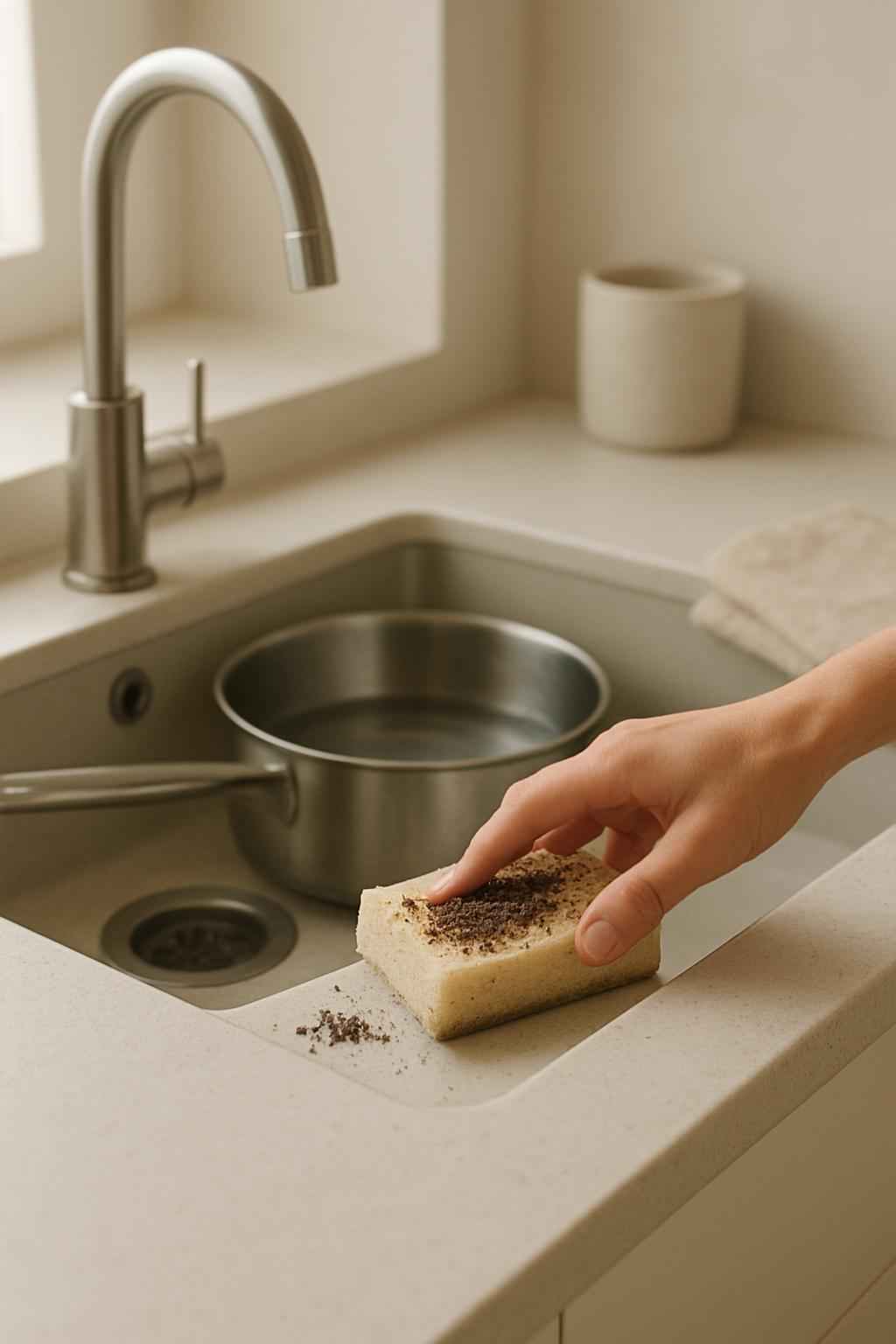

A little care turns spent grounds into a reliable, low‑waste Cleaning and freshening tool you can reach for as part of your everyday routine; embracing safe, consistent habits keeps your home feeling fresher and makes sustainable choices simple and stress‑free.