Reviving Tile Grout Without the Scrub: Expert Tips for a Cleaner, Fresher Floor
Grout lines can go from crisp to dingy faster than the rest of a room, and trying to blast them back to life with stiff brushes or harsh chemicals often makes the problem worse — worn grout, faded tile, or indoor air irritation. This job calls for a careful approach that clears stains and mildew without damaging the porous grout or the surrounding tiles, and without exposing your household to unnecessary fumes.
In the steps below you’ll learn gentle, effective techniques that reduce scrubbing: which Cleaning agents and tools really work, how to test and protect delicate surfaces, safe ways to tackle mildew, and simple finishing and maintenance tips to keep grout looking fresh longer. Practical safety reminders like using gloves and ensuring good ventilation are included so you can clean confidently and safely.
Key Points
- Always test cleaning methods on a hidden grout area and protect adjacent tiles to prevent damage.
- Use gentle tools and low-heat steam to loosen dirt and stains without harsh scrubbing or chemicals.
- Rinse thoroughly and seal grout after cleaning to maintain freshness and protect against moisture and stains.
Pre-test and protect adjacent surfaces
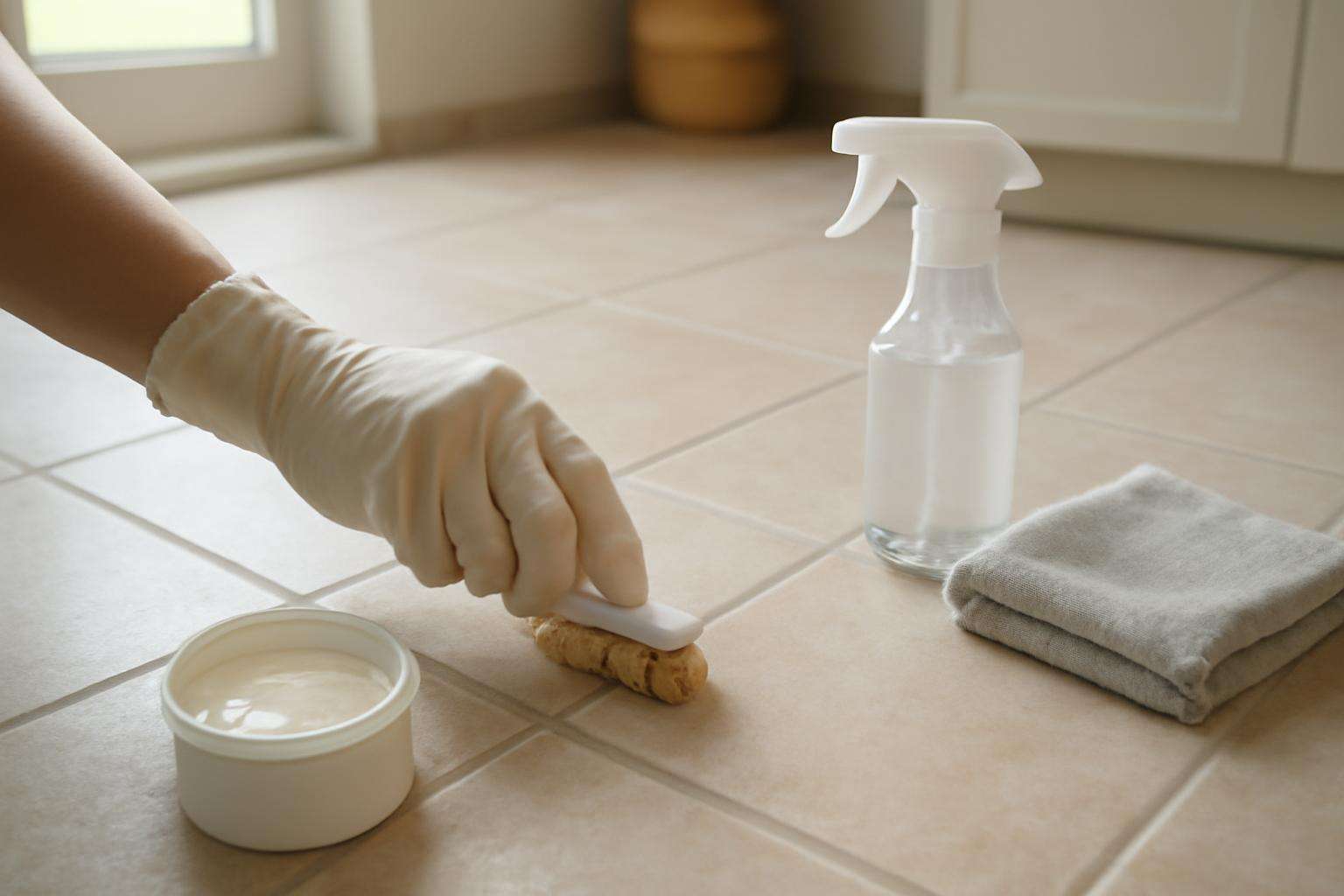
Test your chosen cleaner or method on an inconspicuous grout line to check for discoloration or tile reaction.
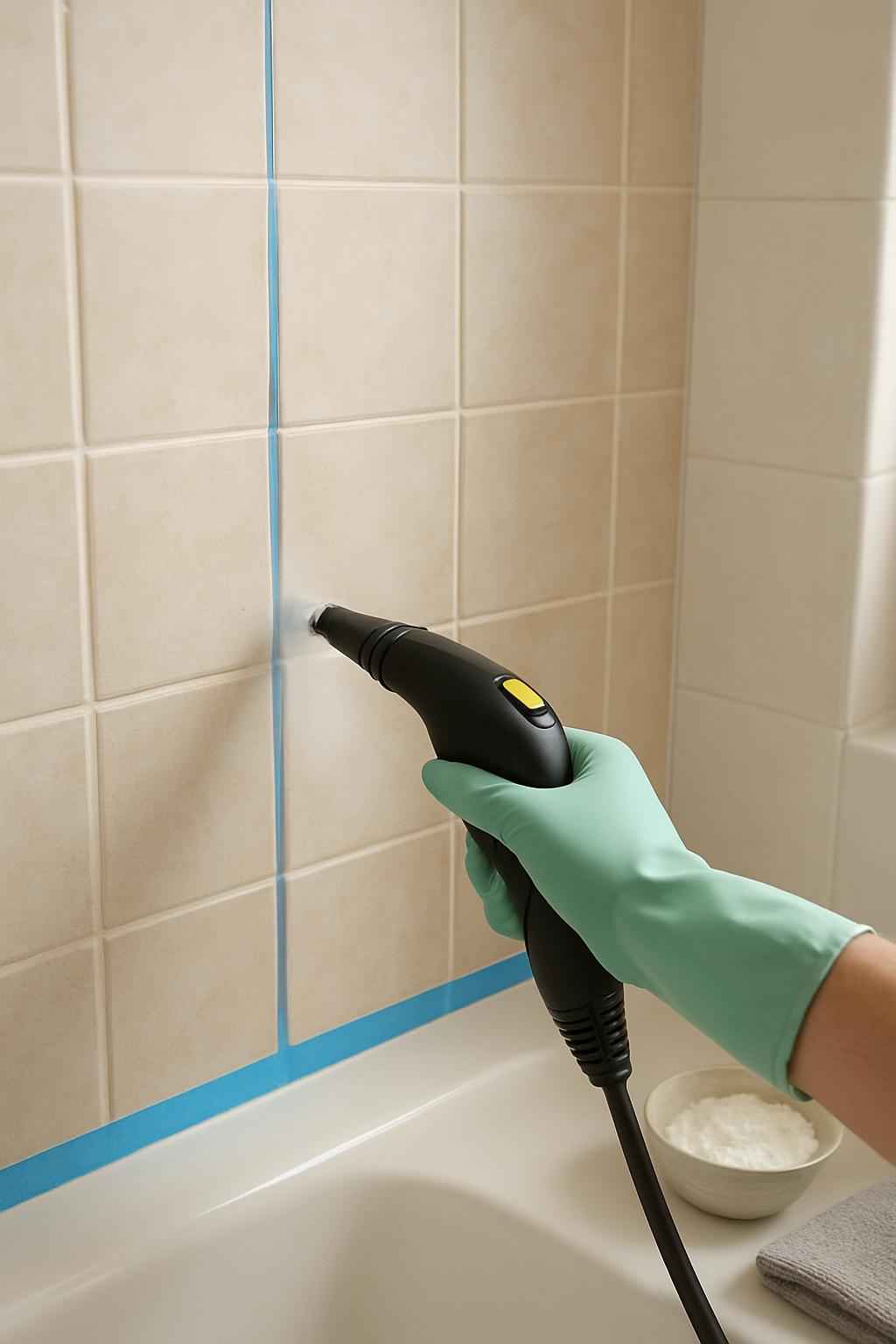
Protect surrounding tiles with painter’s tape and wear gloves and ensure good ventilation to avoid skin or respiratory irritation.
Use low-heat steam to loosen dirt and mildew
Run a handheld steam cleaner slowly along grout lines to soften dirt and break up mildew without chemical cleaners.
Steam lifts debris with heat and moisture so you can wipe it away with minimal scrubbing, but avoid prolonged exposure on older or cracked grout and test on a hidden tile first.
Apply an oxygen-bleach poultice for stubborn stains
Mix oxygen bleach powder with water to a thick paste, spread it over stained grout, cover with plastic for 10–20 minutes, then rinse gently.
Oxygen bleach oxidizes stains and is gentler than chlorine bleach, yet you should test first on colored grout and never mix it with acidic cleaners.
Agitate gently with non-abrasive tools
Use a rubber grout sponge or a soft-bristled brush to lightly work cleaning paste into the lines rather than aggressive scrubbing.
Gentle agitation removes loosened residue without scratching tile or eroding grout, and avoid metal brushes or high-speed rotary tools that can widen grout joints.
Rinse, dry thoroughly, and seal for long-term protection
Rinse thoroughly with clean water and a microfiber cloth, allow grout to dry completely, then apply a penetrating grout sealer according to the product instructions.
Rinsing removes cleaner residue that can attract dirt and a proper sealer repels moisture and stains, while over-applying surface sealers can alter the look of textured tiles.

Adopting small, regular habits and relying on gentle, safety-minded techniques keeps grout and tile looking cared-for without turning upkeep into a chore, so your floors stay fresh, the air stays clear, and you can move through your home with steady, practical confidence.