Experts Reveal the Simple Method That Cuts Stove Cleaning Time in Half
A greasy, splattered stove is one of those chores that feels both urgent and fiddly: baked-on spills stick to grates, sticky knobs trap grime, and hasty scrubbing can scratch finishes or disturb electrical and gas components. Because of the heat, flammable residue, and delicate parts involved, this Cleaning task requires a careful, methodical approach rather than brute force.
In the steps that follow you’ll learn a simple soak-and-lift method that reduces scrubbing time while keeping burner grates, control knobs, and surface finishes safe. I’ll cover the right order to disassemble and reassemble parts, safe cleaning solutions and tools, and quick maintenance habits that keep your stove cleaner for longer — without risking damage or creating extra work.
Key Points
- Always cool the stove completely and keep electrical components dry to ensure safety and prevent damage.
- Use a soak-and-baking soda paste method with gentle tools to effectively remove grease without scratching surfaces.
- Wipe spills promptly and dry parts thoroughly before reassembling to maintain cleanliness and prevent rust.
Cool and disassemble in the right order
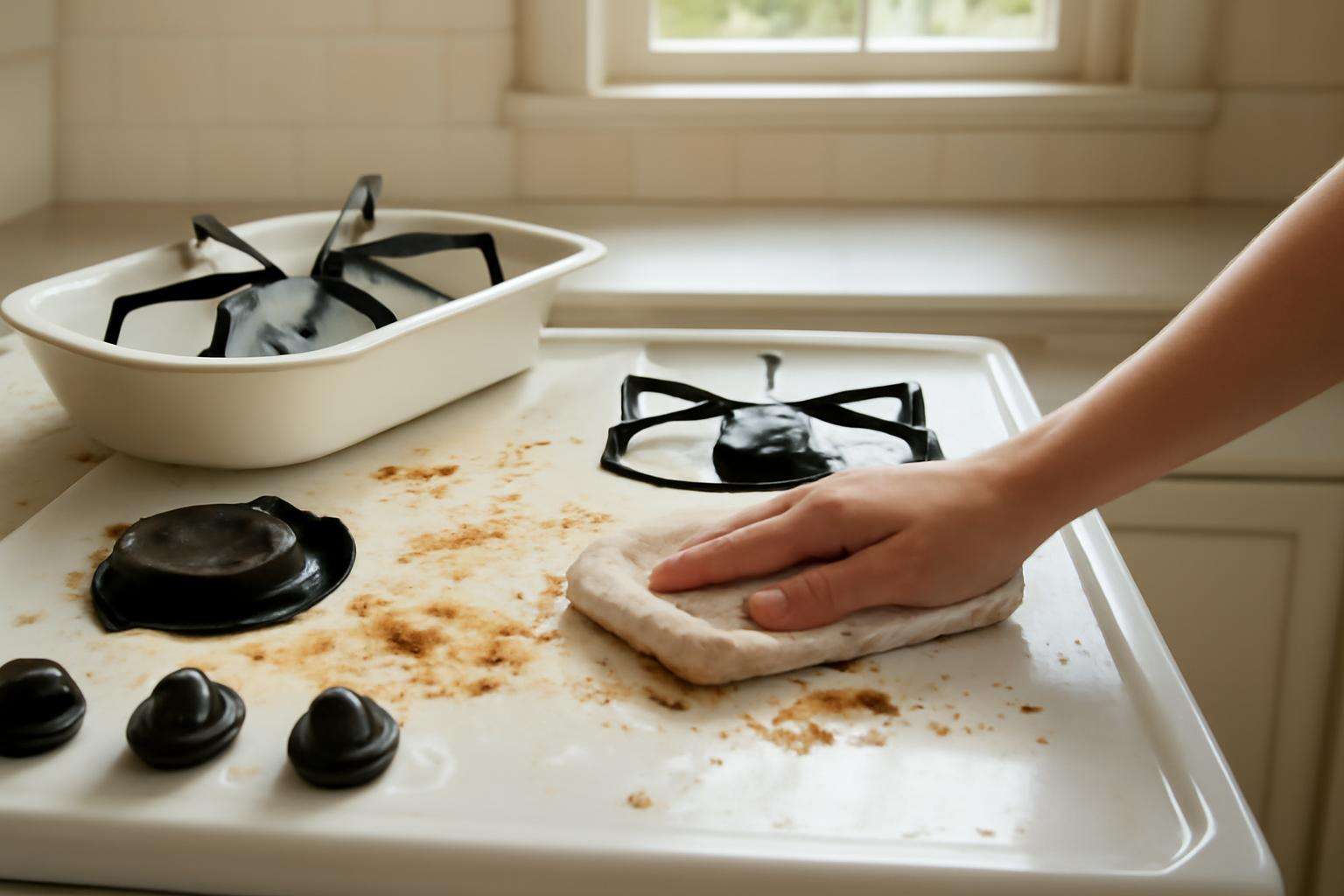
Turn off the stove, let everything cool completely, and then remove grates, burner caps, and removable knobs to prevent burns and expose greasy parts for cleaning.
Keep electrical and ignition components dry by never submerging coil connectors, control modules, or spark igniters, and check your manual before removing any wired parts to avoid damage.
Soak grates and removable parts to loosen baked-on grease
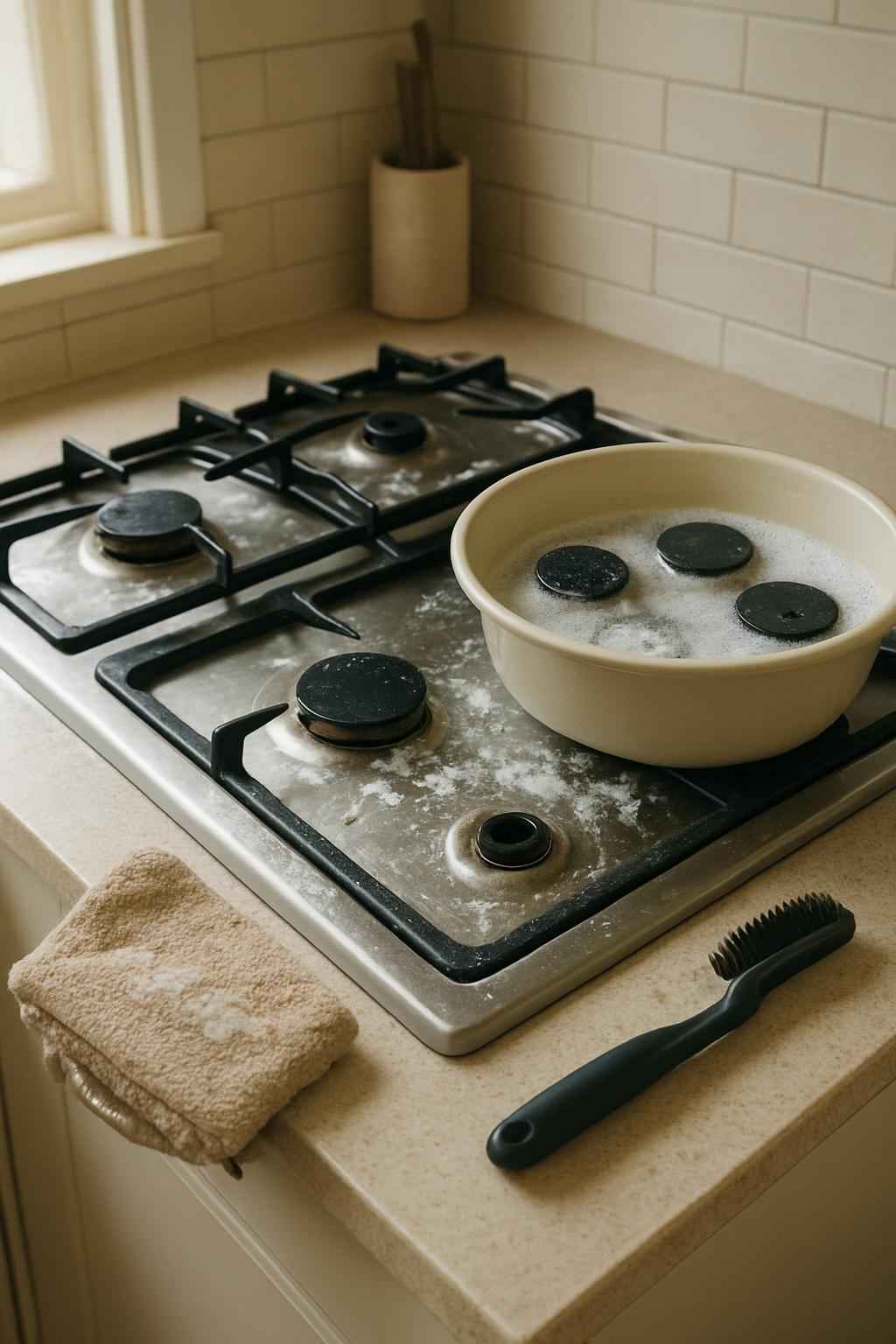
Place grates and non-electrical parts in a basin of hot water and dish soap and sprinkle or make a paste with baking soda to help lift stubborn grease; soak 15–30 minutes for typical buildup.
For very baked-on residue, let a baking-soda paste sit on the piece for 20–30 minutes and then use a nylon brush or plastic scraper to avoid scratching porcelain or enamel finishes.
Degrease the stovetop without scratching finishes
Spray a solution of warm water with a little dish soap or a 1:1 mix of white vinegar and water onto the surface, let it sit briefly, and wipe with a microfiber cloth to dissolve grease and prevent streaks.
Avoid abrasive powders, steel wool, and harsh bleaches on stainless, enamel, or coated surfaces, and never spray cleaners directly into burner openings or onto igniters to prevent corrosion or electrical faults.
Dry, reassemble, and adopt quick maintenance habits
Thoroughly dry all parts—especially cast-iron grates and gas ports—before reassembling to prevent rust and ensure proper ignition, and reinstall only when igniters and connectors are completely dry.
Keep the stove cleaner longer by wiping spills while still warm with a damp cloth, avoiding heavy cooking sprays that build residue, and briefly oiling cast-iron grates after drying to protect against rust.

Keeping a few simple, safety-first habits in your routine makes stove care feel manageable rather than daunting — consistent, practical maintenance protects the finish and mechanical parts, shortens future cleanups, and leaves you confident to cook without extra worry.